The use of clearing and mulching equipment in forestry work presents unique safety challenges. These powerful machines, essential for preparing land and managing vegetation, can cause serious accidents if they are not handled correctly. Safety on forestry job sites depends directly on mastering best practices and complying with established protocols for this specialized equipment.
Preparation and inspection of clearing and grinding equipment
Before any use, a complete machine inspection is the first line of defense against accidents. This systematic check must include the condition of the mulching blades, the integrity of the hydraulic systems, and the functionality of the safety devices.
Operators must carefully check hydraulic fluid levels, wear on moving parts, and the condition of protective guards. Clearing blades that are dull or damaged significantly increase the risk of flying debris and malfunction. An up-to-date maintenance log makes it possible to track the history of servicing and anticipate repair needs.
Checking emergency stop systems is crucial. These devices must be tested daily and remain easily accessible from the operator’s position. Inspecting protective cabs, reinforced glass, and rollover protection structures ensures the operator’s protection in the event of an incident.
Safe operating techniques for grinding machines
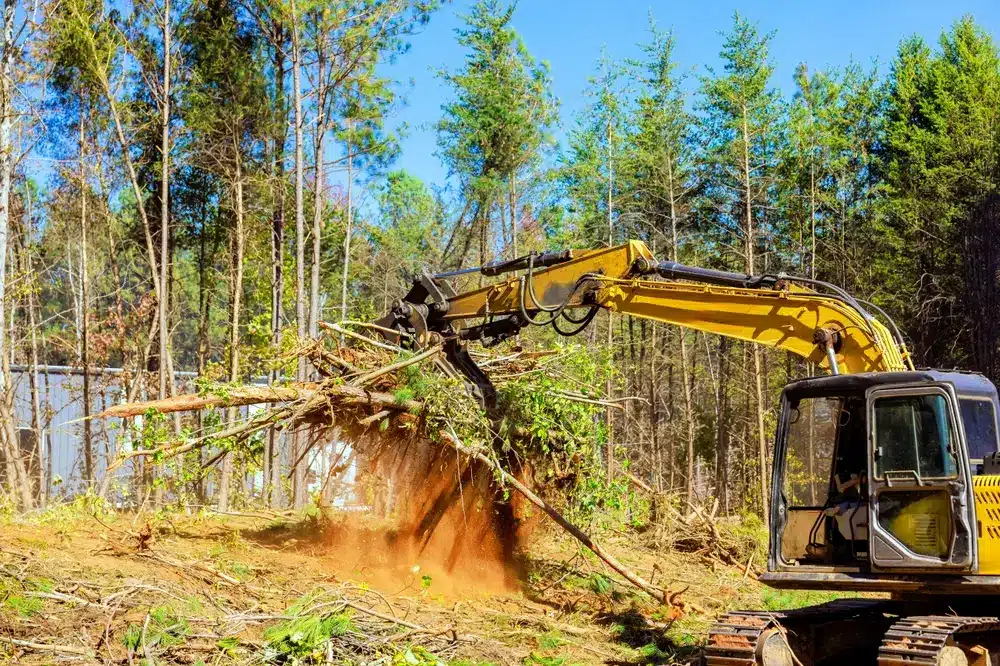
Mastering appropriate operating techniques is what distinguishes experienced professionals from beginners. The positioning of the machine in relation to the slope of the terrain directly affects the stability and safety of the operation. Work on sloping ground requires particular attention to avoid the risk of tipping over.
Controlling travel speed is a decisive factor. Moving too quickly can overload the grinding system and cause dangerous blockages. Conversely, an appropriate speed allows for consistent grinding and reduces premature wear on components.
Managing obstacles requires a methodical approach. Stones, stumps, and metal debris must be identified and either avoided or removed before the machine passes through. Modern clearing machinery often includes detection systems that alert the operator to the presence of hard objects that could damage the equipment.
Changes in direction must be carried out gradually, after reducing speed and ensuring the stability of the ground. Sudden maneuvers can destabilize the machine and create dangerous situations for the operator and anyone present on the job site.
Managing environmental risks during forestry work
The forestry environment presents specific challenges that require constant adaptation of safety protocols. The presence of unstable trees, uneven terrain, and changing weather conditions directly affects operational risks.
A preliminary assessment of the terrain is essential before any work begins. This analysis must identify risk areas: excessive slopes, unstable ground, stagnant water, or particularly dense vegetation. Mapping these elements makes it possible to adapt the intervention strategy and plan any additional equipment required.
Weather conditions have a significant impact on operational safety. Fog reduces visibility and makes it more difficult to identify obstacles. Rain makes terrain slippery and increases the risk of skidding. Strong winds can project debris and destabilize surrounding trees. Work must be stopped whenever conditions no longer allow for safe operation.
Communication with teams on the job site requires clear protocols to be established. Visual and sound signals must be defined in advance and understood by everyone. Marking out work zones protects workers and prevents dangerous interference between different activities.
Training and certification for grinding equipment operators
Operator competence is the central pillar of safety on clearing job sites. Specialized training is not limited to learning the controls: it also includes understanding mechanical principles, identifying risky situations, and mastering emergency procedures.
Certification programs recognized by the profession guarantee a consistent level of competence. These training courses cover the technical, safety, and regulatory aspects of using grinding equipment. Practical validation on different types of terrain and vegetation completes the theoretical learning process.
Regularly updating knowledge is essential in light of technological developments in equipment. New safety systems, ergonomic improvements, and regulatory changes require ongoing training. Manufacturers generally offer advanced training sessions adapted to developments in their product ranges.
Mentoring by experienced operators accelerates the acquisition of safe working reflexes. This transfer of practical know-how effectively complements formal training and allows operators to adapt to the local specificities of forestry job sites.
Preventive maintenance and safety of grinding machines
A rigorous preventive maintenance program is an essential investment in both the safety and profitability of equipment. This proactive approach makes it possible to detect potential failures before they cause dangerous or costly breakdowns.
The maintenance intervals recommended by manufacturers are only a minimum requirement. Intensive use in forestry environments often justifies shortening these intervals. Monitoring operating parameters, such as hydraulic fluid temperature and component wear, helps guide maintenance decisions.
Traceability of maintenance operations facilitates monitoring machine condition and optimizing operating costs. Modern digital maintenance logs allow for precise tracking and make it easier to plan interventions. This documentation is also valuable for insurance purposes and regulatory inspections.
Training maintenance personnel in the specific features of clearing equipment ensures the quality of servicing. These complex machines require particular skills for maintaining high-pressure hydraulic systems and specialized cutting components.
The rigorous application of these safety tips protects your teams and optimizes the productivity of your forestry job sites. To benefit from clearing and grinding equipment that is perfectly maintained and compliant with the strictest safety standards, contact us today to discuss your professional forestry machine rental needs.